Nassau County has 240 nursing home beds. By 2040 it will have 14,454 residents over 80.
The county spent a year fighting about paid parking. The arithmetic that actually decides where your parents live has never been on an agenda.
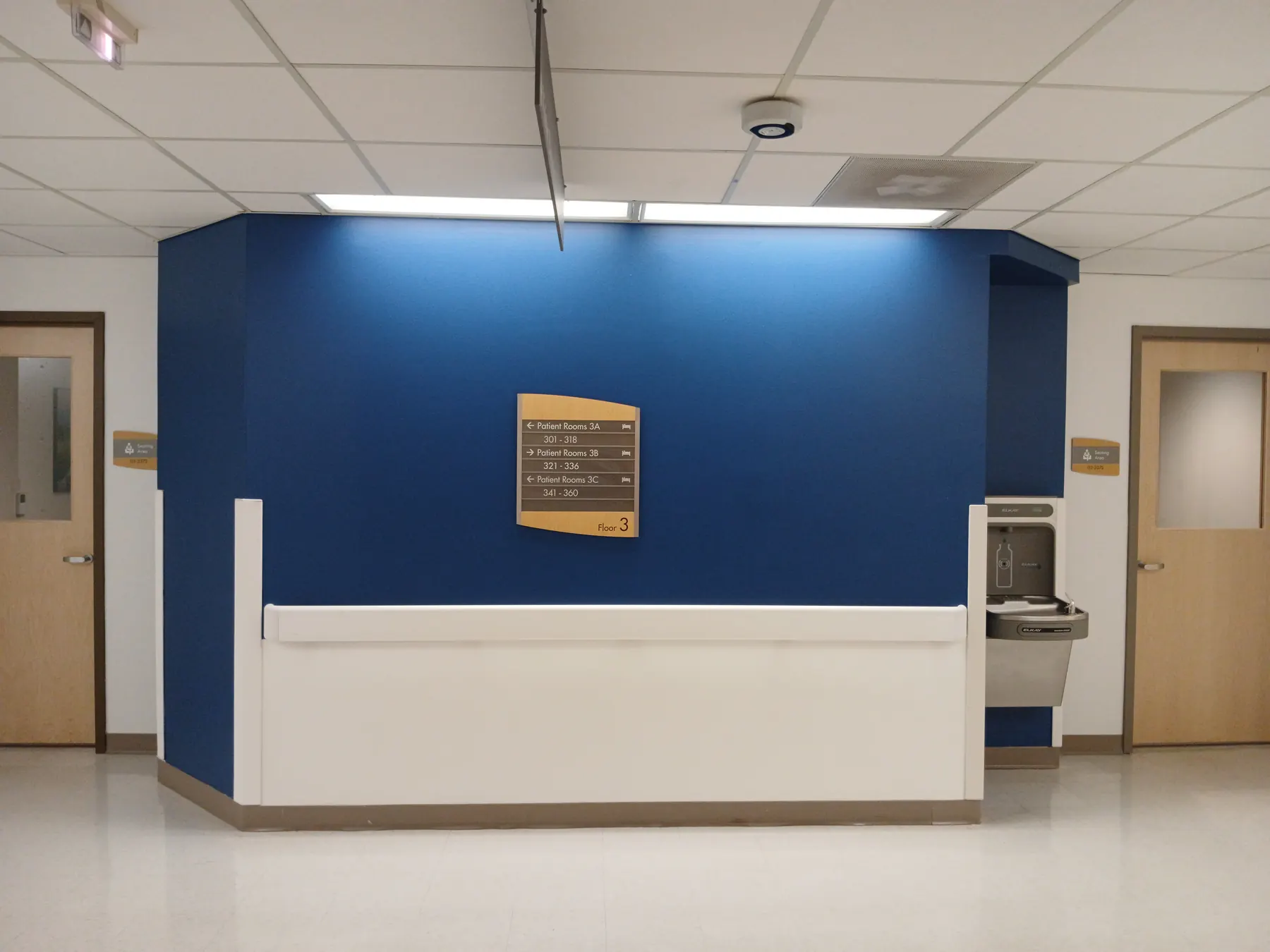
Photo: Ser Amantio di Nicolao, CC BY-SA 4.0, via Wikimedia Commons. Illustrative — not a Nassau County facility.
Why nowThe 2026-27 county budget hearings are in September. We could not find long-term-care capacity anywhere on the agenda.
Nassau County has two certified skilled nursing facilities. One is in Fernandina Beach. One is in Hilliard. Together they hold 240 beds, and on an average day about 223 of them are occupied — roughly 93%.3
That is the entire institutional long-term-care plant for a county of 107,000 people.
The cohort is already here
The University of Florida’s Bureau of Economic and Business Research publishes the state’s official population projections by county and age. Its most recent age-specific bulletin puts Nassau County’s population aged 80 and over at 5,753 in 2023. By 2030 it projects 9,246. By 2040, 14,454. By 2050, 17,912.1
That is a 151% increase in seventeen years. It is not a speculative forecast. The people who will be 80 in 2040 are 66 today, and a disproportionate number of them already live here: Fernandina Beach’s median age is 58.6, and more than half of its owner-occupied homes are headed by someone 65 or older. BEBR’s newer countywide totals, published in February 2026, run one to two percent above the bulletin those age figures come from — so if the number is wrong, it’s wrong in the direction of more.2
What the ratio does
Put the two numbers together. Today the county has roughly one certified nursing bed for every 24 residents over 80. Hold the bed count flat and by 2040 it’s one for every 60.
A 68-year-old buys a golf membership. An 84-year-old needs a nurse. Nassau County has spent a decade attracting the first and has built almost nothing for the second, and the first becomes the second on a schedule that nobody can negotiate with.
The consequence isn’t abstract. It is the adult son in Yulee learning that the nearest available bed for his mother is in Duval County. It is the hospital discharge planner at Baptist Nassau who cannot place a patient. It is the county EMS budget, because frail elderly residents generate ambulance transports at multiples of the general population rate, and every one of those calls is paid for out of the general fund the county is currently arguing about.
What the county is talking about instead
The 2026-27 budget hearings are in September. Whether any long-term-care capacity planning exists in any county department is a question that sits on the Unverified ledger until it’s answered. Over the past year the most-discussed municipal issue on the island, by any measure — public comment minutes, referendum, recall effort — was paid parking, a question worth, by the city’s own projections, on the order of $1.5–2.5 million a year.
We are not saying parking doesn’t matter. We are saying that the county’s civic attention and its actual future have diverged, and the gap is measurable.
What would change the picture
A large skilled-nursing or continuing-care development. New nursing-home beds in Florida still run through AHCA’s Certificate of Need process, which allocates beds by district on a published need formula — so the first signal would be a CON application, not a groundbreaking. We’ll watch AHCA’s filings and report the first one for Nassau.
The other thing that would change it is the number we could not get: the county’s total assisted living bed count. AHCA licenses every ALF individually and does not publish a county aggregate. Five licensed facilities were identifiable by name; their combined capacity is not stated anywhere we could find. That question sits on the Unverified ledger until an answer arrives. If the ALF layer turns out to be large, this story gets better. If it turns out to be small, it gets much worse.
The verdict, with the facts above it
Two facilities. 240 beds. 14,454 people over 80 by 2040, from a state agency’s own arithmetic. No plan, no line item, no agenda item. That is not a controversy. It is a subtraction problem the county has declined to do.
Where we could be wrong
Bed counts are a crude proxy. Care has shifted toward home- and community-based models for thirty years, Medicaid policy actively pushes people out of institutional settings, and the assisted-living and memory-care layer — which this piece could not count — absorbs a large share of the 80+ population that never enters a skilled facility. A county can be underbuilt on SNF beds and adequately served if its ALF, home-health, and hospice capacity grows. Nassau's ALF bed count is the number that would settle this, and we don't have it yet.
This claim is on the Scorecard
- Our probability
- >95%
- Resolves by
- 2040 — interim check 2030 (cohort 9,246). Secondary call: ~85% that certified SNF beds remain under 400 in 2040.
- What would prove us wrong
- A certified skilled-nursing facility of 150+ beds licensed in Nassau County before 2032, or a BEBR revision cutting the 2040 80+ projection below 10,000.
Confidence levels, sourcing rules, and how we handle errors: Methodology. Spot a mistake? Email corrections — we fix it at the top of the post within 24 hours.
The number nobody else in Nassau County has, in your inbox before the meeting.
Sourced, linked, corrected in public. Unsubscribe with one click; we'd rather have 500 readers who forward it than 5,000 who don't.
We never sell the list. Publisher: Amelia Undertow Media LLC.